More AI Doesn't Automatically Mean More Impact
Insights from HubSpot UNBOUND 2026
AI is supposed to make work easier, speed up processes, lighten the load on teams, and support decision-making.
And yet, many companies are currently experiencing something quite different: yet another tool. Yet another agent. Yet another new use case to try out. Writing prompts, checking results, fine-tuning—all while trying not to fall behind again when the next development comes along.
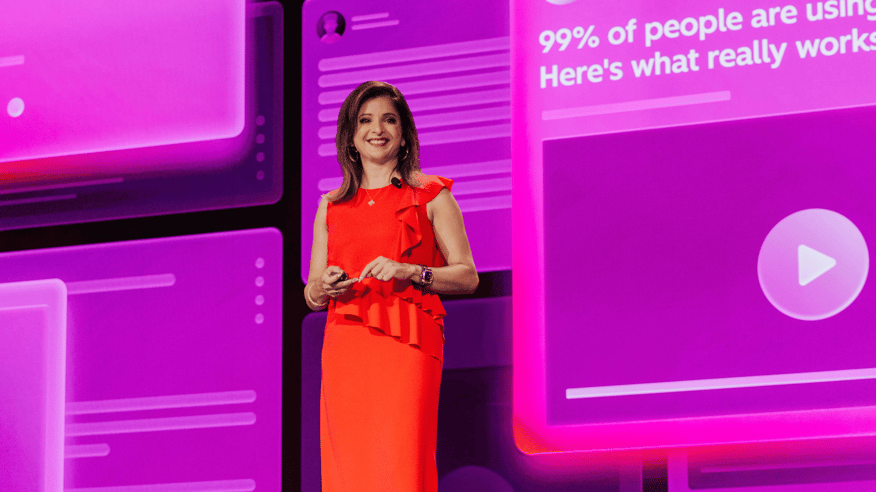
It was precisely this tension that HubSpot CEO Yamini Rangan highlighted as she opened UNBOUND. The focus was less on what’s possible with AI and more on another question:
Why doesn’t more AI automatically lead to greater impact?
A figure from the survey presented by HubSpot sums this up quite clearly: About 90 percent of the companies surveyed already use AI. But according to HubSpot, only 6 percent achieve transformative results with it.
So the crucial question is no longer: Are we using enough AI?
But rather: Are we using it in the right places—and have we even created the conditions necessary for it to work effectively there?
More AI isn’t automatically better
In recent years, the reaction to new technological possibilities has often been the same: try it out, add to it, expand it. One more pilot project. One more tool. One more process into which AI can be integrated.
Yamini Rangan describes this phase as “Maxing”: A new technology develops so quickly that people initially try to do as much as possible with it before it’s truly clear where it provides the greatest benefit.
With AI, we’re seeing exactly that everywhere right now: Agent Maxing, Pilot Maxing, Token Maxing. The underlying assumption is that whoever deploys AI in as many areas as possible will ultimately benefit the most from it.
However, the figures presented by HubSpot paint a different picture.
The companies that achieve particularly strong results with AI do not use as many use cases as possible. Out of approximately 50 AI use cases examined along the customer journey, they focus on an average of just four to five.
So the difference apparently isn’t in doing more with AI. It’s in very deliberately choosing where AI can truly make a difference.
Don’t Start with the Tool—Start with the Outcome
This may sound trivial at first, but it fundamentally changes the perspective on AI. The first question shouldn’t be: Where else could we deploy an agent?
But rather, for example:
- Where are our teams wasting an unnecessary amount of time today?
- Which decisions could be made faster or with greater confidence if we had better information?
- Which recurring tasks can be usefully automated?
- In what areas do employees currently lack an overview of customers, deals, or campaigns?
- Which process is currently holding us back from building demand, closing deals, or providing better customer service?
Only then does the question arise as to whether and how AI can help. This is also crucial because not every AI use case generates the same value.
Creating texts, drafting emails, or summarizing meetings can be implemented quickly. The barrier to entry is low—and at the same time, almost any company can use the same models and features.
Things get more exciting when AI works with a company’s own knowledge: when it analyzes campaigns, prioritizes a pipeline, evaluates customer feedback, recommends next steps, or independently supports processes.
And that’s exactly where a factor comes into play that’s often underestimated in the current AI discussion: context.
Good AI needs more than just data
Data alone doesn’t make AI intelligent for your company. It also needs to understand what that data means.
Which target customers are relevant to you? Which products meet which needs? What does your sales process look like? What criteria determine whether a lead is qualified? How does your brand communicate? Who is authorized to make which decisions? When is approval required? Which information is current—and which is long outdated?
HubSpot summarizes this knowledge under the term “Growth Context.” In the keynote, this context was made tangible primarily through three areas:
- Business context: for example, brand, positioning, products, and offerings
- Customer context: for example, conversations, Ideal Customer Profile, purchase and intent signals
- Team context: for example, roles, goals, ways of working, and responsibilities
In HubSpot, this concept has since been expanded to include, among other things, processes and additional interconnections. The key point remains the same: AI can only truly operate in a way that’s specific to a company if it actually knows the company. Without this context, results are produced—but they’re often generic.
The text sounds polished, but it doesn’t reflect the company’s own brand. A recommendation ignores the actual sales process. An agent works with outdated information. An automation works technically, but doesn’t align with how the team actually works.
In such cases, AI doesn’t automatically save time. In the worst-case scenario, it creates new correction loops.
What HubSpot Is Doing About It
It’s therefore only logical that context also plays a central role in HubSpot’s Case Spotlight 2026. With developments surrounding Growth Context, Context Home, Smart CRM, and the various AI agents, HubSpot is increasingly laying the technical foundation to ensure that AI doesn’t operate in isolation but can access company knowledge and CRM data.
We’ve already summarized the individual new features and our take on them in detail in a separate post:
HubSpot Case Spotlight 2026: An Overview of All the Key New Features
One thing is particularly important for this post: Even the best new AI feature only realizes its full value when the underlying data, processes, and necessary context are in place.
Four good use cases are worth more than twenty half-baked ones
For companies, this leads to a pretty clear conclusion: It’s not about having as many AI initiatives as possible.
You need the right ones.
A use case that’s deeply embedded in a relevant process, based on clean data, and actually used by the team can have a much greater impact than numerous experiments that disappear after a few weeks.
That’s why, in our view, companies should clarify three things:
1. Which outcome do we want to improve?
Is it about efficiency? Faster response times? Better prioritization of leads and deals? Higher data quality? More personalized customer communication?
Without a clear goal, it’s nearly impossible to assess later whether AI has actually improved anything.
2. Does the AI have the context it needs to achieve this?
What data is already in HubSpot? What information is missing? Where is important knowledge still stored in presentations, documents, or the minds of individual employees? Are processes and responsibilities clearly defined at all?
That’s why a good AI use case often doesn’t start with a prompt or an agent, but with CRM structures, data quality, and process optimization.
3. Who evaluates and manages the results?
Even with increasingly powerful models, human judgment remains crucial. People must assess which use cases make sense, which results are accurate, where automation is possible, and where approval is still required.
A quote from Yamini’s keynote sums up this point particularly well:
“In the age of artificial intelligence, human intelligence has never been more important.”
The real work begins before the agent
This is precisely where our work as HubSpot partners is changing.
Of course, it’s still about setting up HubSpot technically sound, integrating data, mapping processes, developing automations, and using new features effectively. But with AI, an additional layer is added.
We need to work with our clients to clarify:
Where is AI actually worthwhile? Which processes are suitable for it? What data and context are still missing? What information needs to be available in a structured format within HubSpot? What can be automated—and what should deliberately remain in human hands?
Sometimes the right solution is a human agent. Sometimes it’s automation. Sometimes it’s a better data structure. And sometimes a process must first be clearly defined before AI can even be used effectively.
We therefore don’t see our role as equipping companies with as many AI features as possible. Rather, it’s about working together to identify the areas where HubSpot, data, processes, and AI—in the right context—actually make a difference—and laying the technical and organizational groundwork for that.
This also involves bringing teams along for the ride and empowering them. After all, in the long run, the greatest benefit doesn’t come from a few individuals knowing how a specific AI tool works. It comes when a company can assess for itself which technology should be used where.
From Theory to Practice: That’s Exactly What PeakSpot Is All About
It’s no coincidence that we’re currently focusing intensely on this topic. Under the motto “Context. More Than Data,” our PeakSpot – konzepthaus HubSpot Summit on October 1 and 2, 2026, in Sonthofen will also revolve around precisely these questions.
Using real HubSpot projects, concrete use cases, and experiences from implementation, we’ll examine what data and processes AI truly needs, where meaningful added value is already being generated—and what isn’t working yet.
Jens Leuke from HubSpot will also be joining us to provide context on the latest developments surrounding HubSpot, UNBOUND, and the 2026 Case Spotlight.
Haven’t registered yet? Click here for PeakSpot:
https://www.konzepthaus-ws.de/anmeldung-peakspot-konzepthaus-hubspot-summit-2026
Conclusion: Ask less about what AI can do—and more about what impact it should have
Numerous new features and developments were unveiled at UNBOUND. For us, however, one strategic message stands out above all else:
More AI doesn’t automatically mean more impact.
The difference doesn’t come from companies using as many tools, agents, or use cases as possible. It comes when they know what outcome they want to achieve, when the necessary data and context are in place, and when people can decide where AI provides meaningful support.
Perhaps that’s why the most important question for companies right now isn’t actually:
“Where else can we use AI?”
But rather:
“Where do we really want to make improvements—and does our AI know enough about our company to help us do that?”
Where can AI really make a difference in your business?
That’s exactly what we’ll explore together with you: from selecting meaningful use cases to data, processes, and the right context in HubSpot, all the way to automations, agents, and customized solutions.
Want to find out where the greatest leverage lies for your company? Then let’s talk about it.