HubSpot Case Spotlight 2026
What's New—and What's Behind the Agentic Customer Platform

Today, AI can generate text, summarize conversations, research information, or suggest next steps in just a few seconds. As a result, it has long since become part of many workflows in marketing, sales, and customer service.
And yet, the same problem keeps cropping up in everyday work: A result may look good at first glance—but still not really fit the company. The text sounds polished, but it doesn’t reflect the company’s brand. The recommendation is plausible, but it doesn’t take the company’s sales process into account. The time saved during creation is often lost again later during the revision process.
The reason for this often lies not in the AI’s capabilities themselves, but in the context it has at its disposal. An AI doesn’t automatically know your brand, your target customers, your positioning, or the processes within your company. If this information is missing, it must be supplemented time and again through prompts, additional documents, or post-processing.
The crucial question is therefore increasingly not just: What can AI do? But rather: What does it know about your company before it begins its work?
This is exactly where HubSpot comes in with the Spotlight 2026 case study.
From Individual AI Features to the Agentic Customer Platform
AI isn’t new at HubSpot. Breeze Assistant, various AI features, and the first agents are already part of the platform.
With the Spotlight 2026 case, however, the approach is shifting fundamentally: HubSpot is no longer just using AI in isolated areas. The platform itself is becoming AI-centric.
That’s why HubSpot refers to it as the Agentic Customer Platform.
Behind this lies a transformation that goes far beyond individual new features: Instead of simply using AI as an additional assistant within the CRM, teams and AI agents are designed to work with the same business and customer context and take on tasks based on that context.
Or, to put it simply: A traditional AI function waits for a prompt. An agent receives context and can take on tasks based on that context.
Much of this context already exists in HubSpot: contacts, companies, deals, tickets, emails, calls, notes, activities, as well as won and lost deals. This is precisely where a key advantage of a CRM lies: much of the information that would otherwise have to be explained to a general-purpose AI is already structured and available there.
But customer data alone isn’t enough.
Context Home: What HubSpot Should Know About Your Business
Not all relevant context can be derived from CRM data records.
How does a company describe itself? How does the sales process work? What is the brand’s voice? Which target customers should be addressed?
This knowledge is often found in presentations, internal documents, templates—or simply in the minds of individual team members.
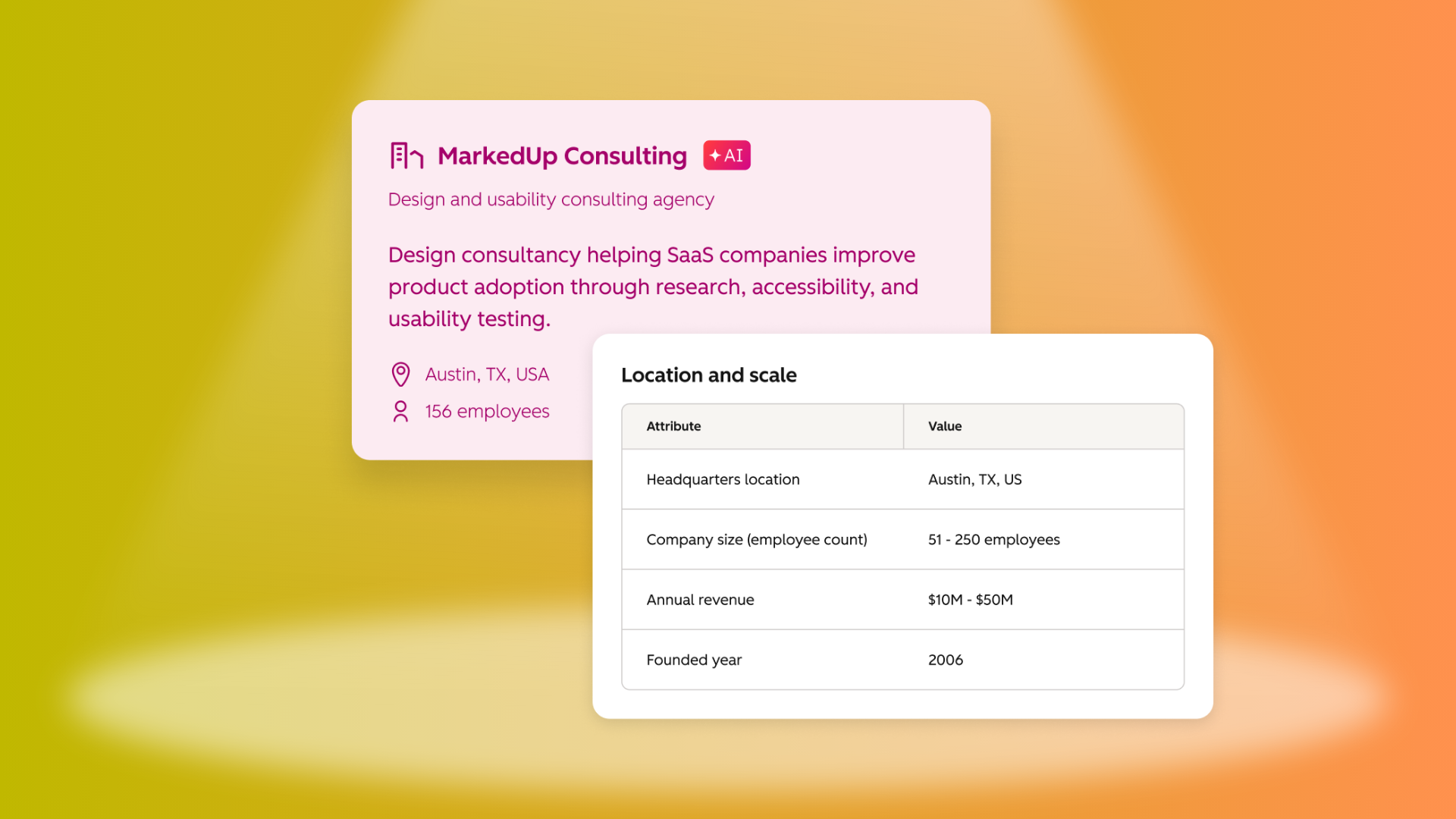
With Context Home , HubSpot creates a central location where what the platform knows about the company becomes visible and manageable. Context Home is located in the Agent Hub and thus serves as a shared foundation for the various agents.
Among other things, information on the following areas can be stored there:
- Business Summary: a description of the company, including location, number of employees, revenue range, and year founded
- Sales methodology: the individual steps of the sales process, each linked to the corresponding deal property
- Brand Voice and ICP Data: information that Breeze and agents can access when creating content
In addition, HubSpot provides recommendations if the existing data paints a different picture than the context previously stored—for example, regarding the business model, company size, or revenue range. These suggestions can be accepted or rejected individually.
This is precisely where Context Home’s relevance lies: information on target audiences, positioning, processes, or brand voice is defined in many companies anyway. Until now, however, it has often been scattered across different locations. Now it can become a direct part of the platform configuration—and thus also the foundation for agents’ work.
Agent Hub: Centrally Manage and Further Develop AI Agents
Once the shared context is established, the next question arises: Where are the various agents actually managed?
That’s what the Agent Hub is for.
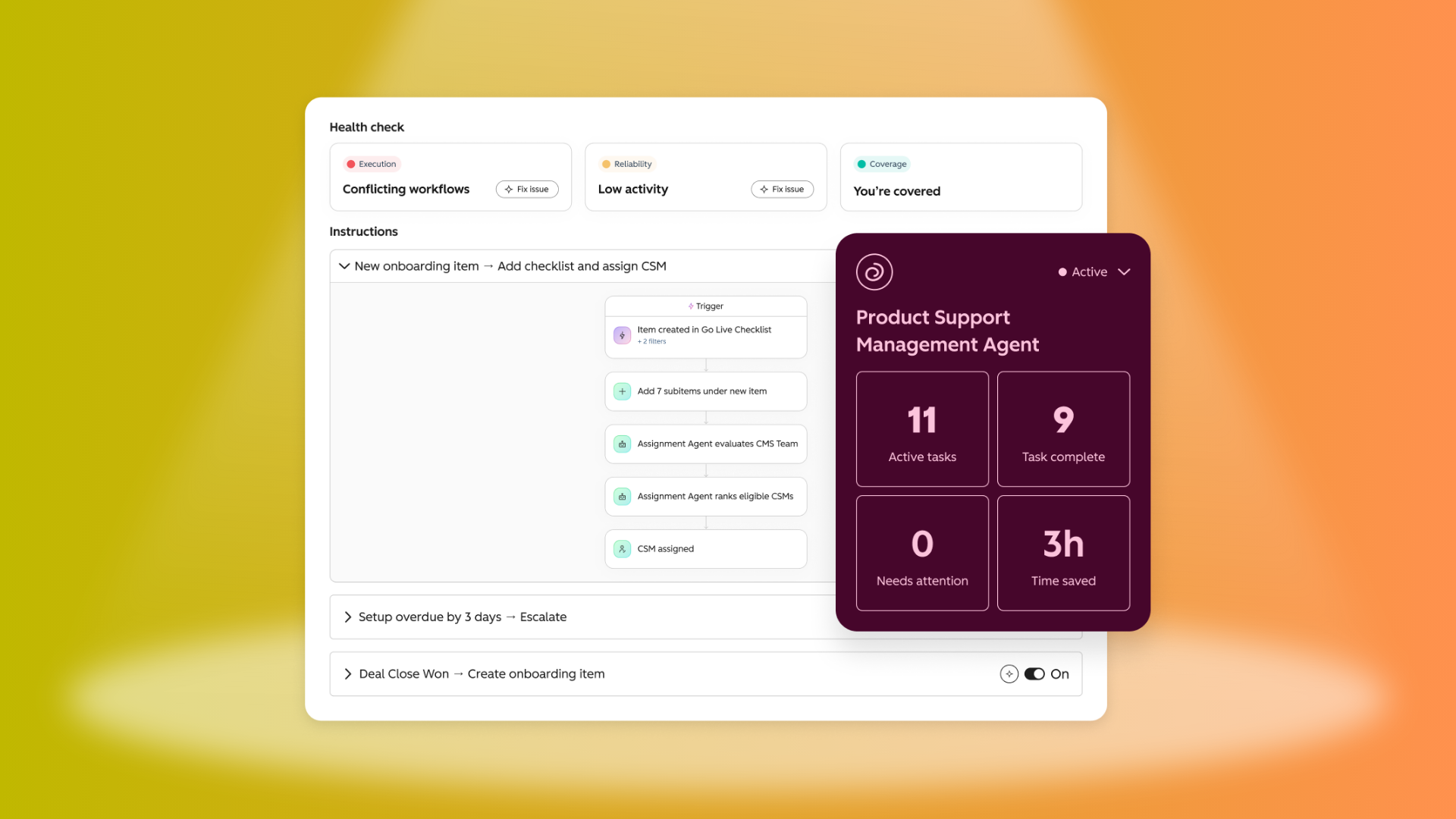
It is the central location for creating and managing agents and keeping track of their results. The various agents are organized along the customer journey, from Attract to Serve. For example, AEO, Data Agent, Prospecting Agent, Deal Progression, and Customer Agent are all available in one place.
Inactive agents can be activated directly, while for active agents, you can view their status, results, and metrics. The logic is based less on individual tools and more on specific goals—such as generating demand, closing deals, or scaling growth.
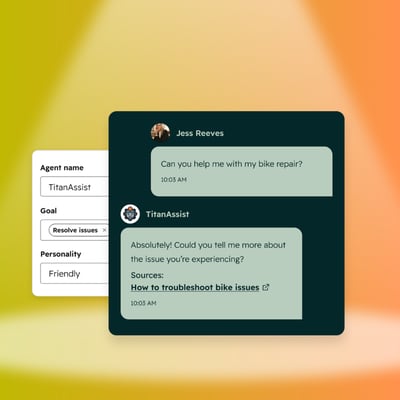
Custom agents can be created using the Agent Builder. Instead of building complex configurations from scratch, users can describe in natural language what task an agent should perform.
Existing workflows can also be converted into agent-based workflows. This means companies don’t necessarily have to start from scratch but can build upon existing automations.
This centralized control is particularly relevant for established HubSpot portals. After all, the more agents independently handle tasks, communicate, or modify data records, the more important it becomes to have transparency into what’s happening where and what results are being generated.
HubSpot Work: Project Management Meets CRM Context
Another major innovation is HubSpot Work.
Many operational processes related to customers now take place outside the CRM: onboarding is organized in spreadsheets, launches are planned in project management tools, internal requests are distributed across different systems, and coordination happens in parallel via email or chat.
Meanwhile, the customer context resides in the CRM.
HubSpot Work is designed to bridge this gap and connect project work directly to the existing CRM context.
Three aspects are particularly relevant here:
- Creation using natural language: Project spreadsheets, documents, custom forms, and related automations can be created based on a description.
- Direct CRM context: Contacts, deals, companies, and tickets are already available and can be linked to the respective tasks.
- Shared workspace: Teams and agents work within the same projects.
HubSpot demonstrates how this might look using the example of client onboarding.
When a deal is closed, a section for the new client is automatically created—including a task tracker, linked contacts, and a handoff document from Sales to Customer Success, which is generated from the deal history in the CRM. If a kick-off meeting is then scheduled, the status updates automatically.
A shared live view makes it easy to track the current status of the various ongoing onboarding processes.
The same principle can also be applied to other recurring processes, such as preparing webinars or internal requests to the HubSpot team.
Marketing Studio 2.0: Plan, Execute, and Evaluate Campaigns
The concept of a shared context is also carried forward in marketing.
The previous Campaign Planning Canvas was primarily used for planning. Reporting and collaboration took place elsewhere.
With Marketing Studio 2.0, HubSpot is fundamentally restructuring this area.
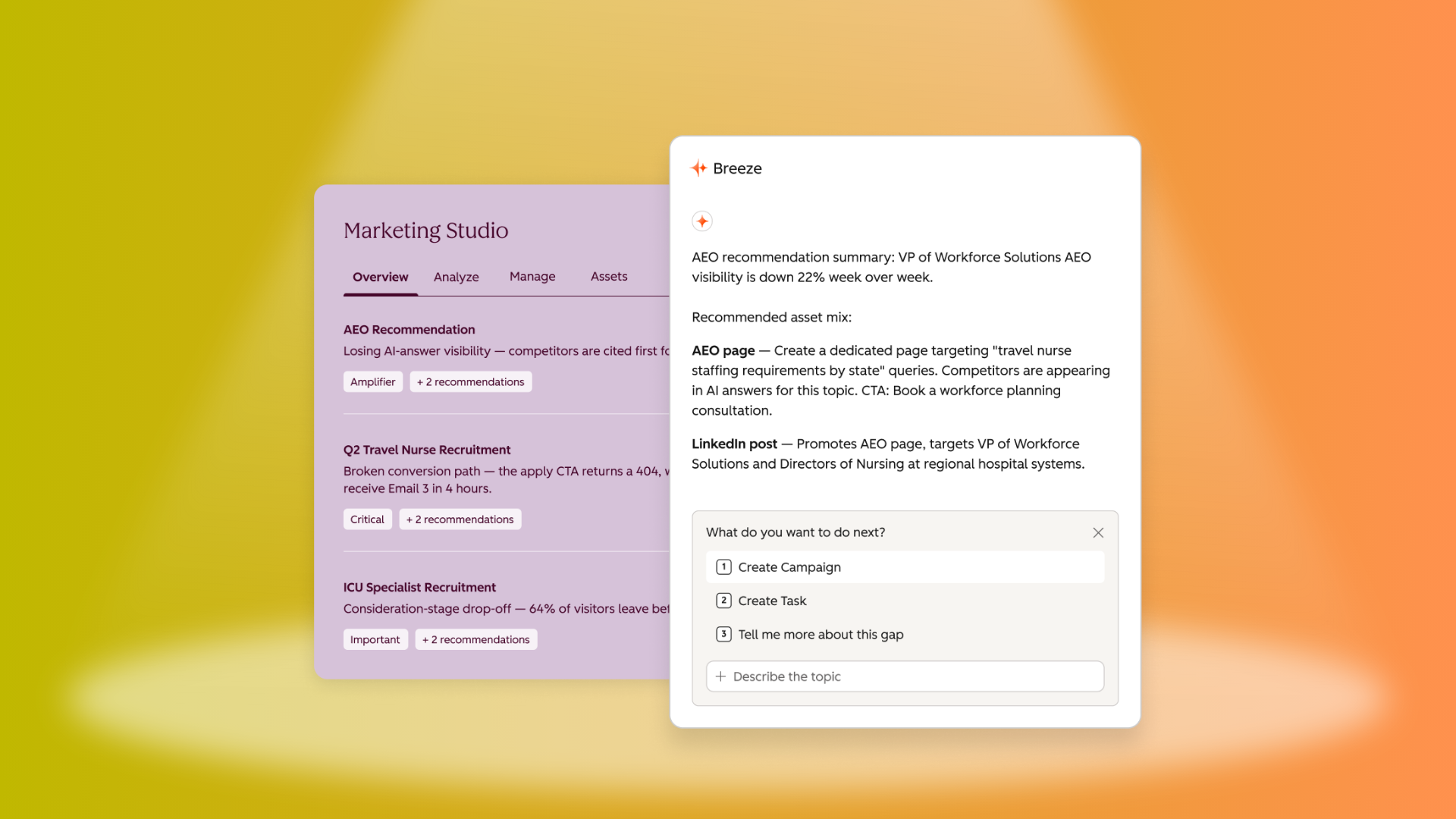
A unified overview brings together ongoing campaigns, resulting deals, and current insights. These might include, for example, an interrupted conversion path within an ongoing campaign, visitors abandoning a page before filling out a form, or a note indicating that competitors are mentioned first in AI responses to a relevant topic.
Further actions can be initiated directly based on these insights.
Three agents are central components:
Campaign Agent
The Campaign Agent assists with planning. To do so, it first draws on existing context regarding the brand and past campaigns, asks about the campaign goal, and uses this information to create a campaign brief that includes the topic, target audience, and suggestions for suitable assets.
Content Agent
Among other things, the Content Agent creates blog posts, LinkedIn posts, and landing pages based on the stored context and existing AEO insights.
Individual pages can be created using the Breeze Assistant, while multichannel campaigns are managed via the Campaign Agent.
Nurture Agent
The Nurture Agent personalizes nurture emails at the contact level. To do this, it takes into account the brand voice, ICP data, and current information about the respective contact and their company before creating the emails.
Using Deep Research, it also identifies key areas for action across various campaigns and prioritizes them based on their potential impact.
This is precisely where the fundamental concept behind the Case Spotlight becomes particularly clear: The quality of an AI-powered task no longer depends solely on how detailed a single prompt is written. What is becoming increasingly crucial is the context already available within the platform that can be utilized by the various agents.
What does this mean for companies in concrete terms?
As exciting as the new features are, they also have a fairly clear implication for businesses. As AI and agents increasingly work autonomously based on existing context, the quality of that context becomes even more important.
Three topics are particularly central here:
Data quality:
Agents work with the information available in the CRM. Incomplete, outdated, or inconsistent data therefore does not become any less relevant simply because AI comes into play.
Process clarity:
For a system to understand a process and build upon it, the process must first be defined. For example, a sales methodology can only be meaningfully stored in Context Home if the company has a clear understanding of how its own sales process actually works.
Governance:
The more tasks are automated or handled by agents, the more important clear rules become: What can happen automatically? Where is approval required? And who is responsible for the respective processes?
The interesting thing is that none of these topics is fundamentally new.
Data quality, clear processes, and governance were already important prerequisites for a functioning CRM. With an Agentic Customer Platform, the effects of a good—or poor—foundation become much more immediately apparent.
Conclusion: Context Becomes the Decisive Factor
For us, this is precisely the most exciting development behind the Spotlight 2026 case study: The more AI within HubSpot not only supports but actually takes over tasks itself, the more important it becomes what it can draw upon in the process.
AI does not relieve companies of the work involved in maintaining good data, clear processes, a defined target audience, or consistent positioning. On the contrary: it is precisely these fundamentals that are becoming even more important.
The key question in the future will therefore be less about how many AI features a company uses, and more about how well its own platform is prepared to provide AI with the right context.
And this is exactly where it’s worth taking a closer look now: What information is already neatly organized in HubSpot? Which processes are clearly defined? What knowledge is still locked away in individual documents or people’s heads? And where might the foundation still be missing so that agents can truly provide meaningful support?
Because in the end, it won’t be just the most powerful AI that makes the difference—it will be the combination of technology and the right context.
That’s exactly what we’ll be discussing at PeakSpot
The fact that HubSpot is placing such a clear focus on context with the Spotlight case study couldn’t be better timed for this year’s PeakSpot – konzepthaus HubSpot Summit.
Under the motto “Context. More than data or tools,” we’ll be addressing exactly this question on October 1 and 2 in Sonthofen: What does AI need to truly add value in everyday business operations—and what role do data, processes, CRM, and HubSpot play in this?
We won’t just be looking at theory or new features. We’ll be focusing on real HubSpot projects, concrete experiences with AI and automation, and what’s already working today—and what isn’t quite there yet.
Jens Leucke, Country Lead for Germany at HubSpot, will also be on-site at PeakSpot to provide insights into HubSpot’s current strategy as well as the most important developments and highlights surrounding UNBOUND and the Fall Spotlight 2026.
Haven’t registered yet? You can find all the details about PeakSpot 2026 here

.png?width=400&name=Spotlight%20HubSpot%20(1).png)